Habitat banks taking allocations
Essex BNG schemes
Two habitat banks in north-east Essex are taking allocations of off-site biodiversity units: Priors Farm at Fingringhoe and James Farm in Tendring. New to the rules? Read what biodiversity net gain asks of developers.
Get in touch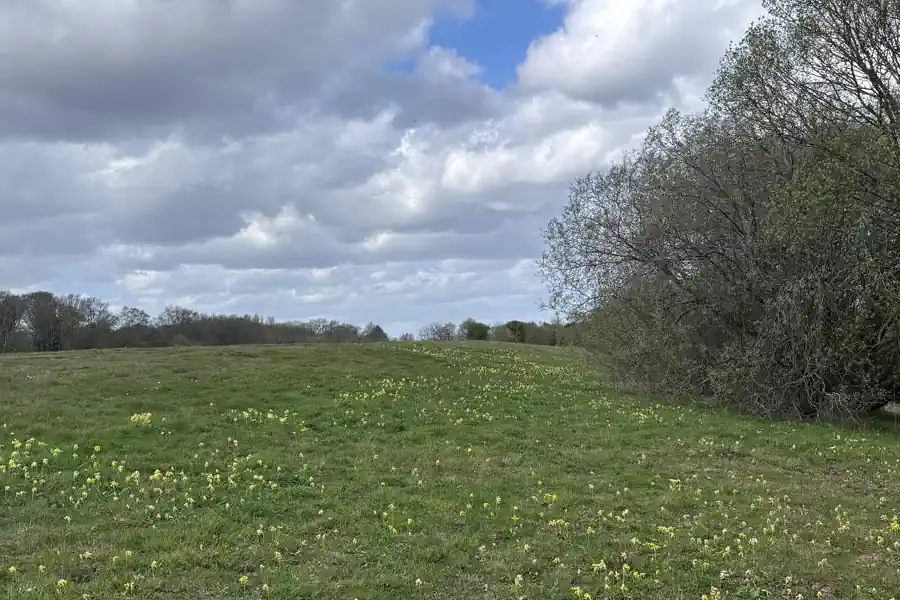
- Location: Fingringhoe, on the Colne Estuary
- Planning authority: Colchester City Council
- National Character Area: Greater Thames Estuary
- Secured by: Section 106 agreement
- Status: Taking allocations
Priors Farm, Fingringhoe
Priors Farm was worked for sand and gravel from the 1930s until around 2020. It sits alongside Fingringhoe Wick, Essex Wildlife Trust's first nature reserve, opened in 1961, and adds a large new block of habitat next to it.
The centrepiece of the 62-hectare site is 24 hectares of open mosaic habitat, a rare habitat that needs exactly the low-nutrient, free-draining ground a former quarry provides. A further 33 hectares of woodland, scrub, grassland and ponds are being brought into active management. Reedbed, hedgerows and saltmarsh within the Colne Estuary Site of Special Scientific Interest are left untouched.
Habitats on the scheme include open mosaic habitat, other neutral grassland, gorse scrub, lowland mixed deciduous woodland, wet woodland and other broadleaved woodland.
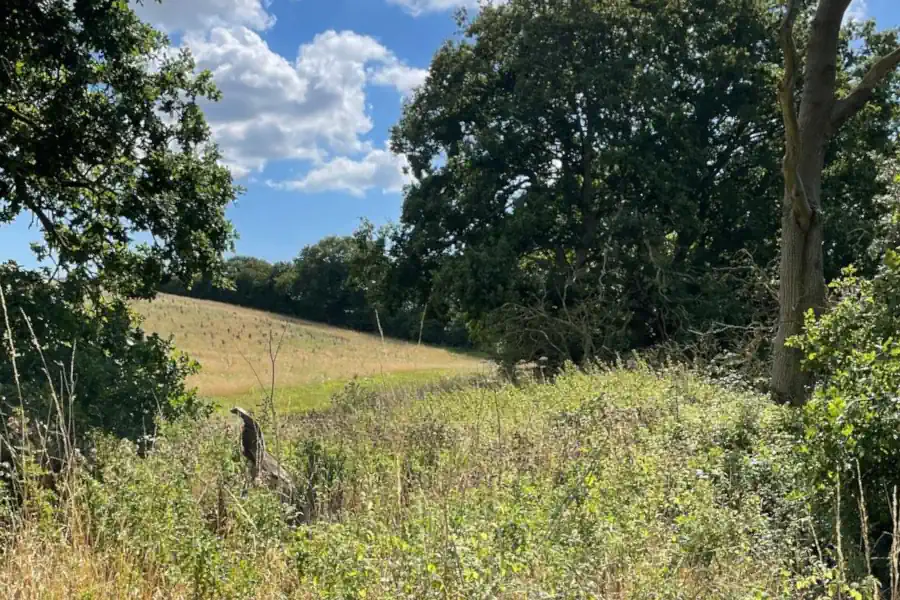
- Location: Far Thorpe Green, near Weeley
- Planning authority: Tendring District Council
- National Character Area: Northern Thames Basin
- Secured by: Conservation covenant, with Fera Science as responsible body, for 30 years from 2026
- Status: Taking allocations
James Farm, Tendring
James Farm was fallow arable land with two fields of improved grassland, a small wet woodland copse and Holland Brook along its southern edge. Years of intensive farming left its hedgerows in poor condition.
Restoration follows a nature-led approach. Low-density cattle grazing shapes a mosaic of grassland, and scrub is left to spread from the hedgerows and woodland edges. Five hectares of new woodland are being planted in natural clusters, in an area the Essex Local Nature Recovery Strategy marks as a priority for woodland creation. A new grassland buffer along Holland Brook will cut runoff from the surrounding farmland.
Otter, badger, five species of bat, kingfisher, skylark and cuckoo have been recorded in the area. The site borders two Local Wildlife Sites, Far Thorpe Green and Upper Holland Brook, and Weeleyhall Wood Site of Special Scientific Interest lies just over a kilometre to the south.
Habitats on the scheme include other neutral grassland, mixed scrub, lowland mixed deciduous woodland, wet woodland, native species-rich hedgerow with trees, and ditches.
Indicative prices
| Habitat type | Price per unit, from |
|---|---|
| Grassland | £18,000 |
| Scrub | £22,000 |
| Hedgerow units | £22,000 |
| Woodland | £30,000 |
| Ponds, reedbeds and open mosaic habitat | £50,000 |
Indicative prices, subject to availability. Get in touch for a quote.
See all indicative prices and how location affects the units you need.
Want units from Priors Farm or James Farm?
Tell us where your development is and what your metric shows. We will tell you which scheme suits it and send you a quote.
Get in touch